About Us
About Commercial Roofing Yonkers
About Us
About Commercial Roofing Yonkers
A roof file that says only "leak, patched" does not help the next person who has to decide what to do. Commercial Roofing Yonkers works on commercial and industrial roofs in Yonkers, NY and nearby Westchester communities, and the thing we sell is a defensible decision supported by a clear record. We repair, replace, recover, coat, inspect and maintain low-slope and metal roofs. We work on buildings that are occupied, so tenant impact, access windows and loading routes are planned before crews stage equipment. Every visit ends with photographs, a short list of open items and a recommended next step the owner can accept, defer or question. The record is written so that a person who was not on the roof can still understand what was found.
The company serves owners, managers, facility teams and contractors who need that kind of record. Some come with an active leak. Others come with a capital plan, a sale or a lease renewal. In each case the first job is to separate what is known from what is guessed, and the second is to price the work that the evidence supports.
What we do
Our work falls into four groups. Repair and replacement covers the physical work on roof leaks and failed details and on full replacement, including recover options over a dry roof. Evidence work covers hands-on inspection, drone passes, infrared moisture surveys and written condition reports. Response work covers emergency protection for active water entry, available at any hour and on holidays. Maintenance work covers scheduled visits that clear drains, test seams and log changes.
Single-ply, asphalt-based, metal, foam and coating systems are all part of the work. Before touching any of them we confirm what the existing assembly is, because compatibility at seams, flashings and adhesives decides whether a repair holds. We also prepare insurance claim documentation when storm damage is involved, and we state plainly that the carrier, not the roofer, decides coverage. Our job is to make the physical evidence clear, separating dated damage evidence from temporary protection and permanent repair. Skylights, curbs, drains, edge metal and rooftop equipment supports are treated as parts of the roof assembly, not as extras, because most leaks begin at one of them.
How a job moves
A job starts with a conversation about the building: use, tenants, hours, leak history and any records the owner holds. We walk the roof, photograph in sequence and sketch the layout with findings placed on it. Observed conditions are written apart from suspected causes, since a stain inside a ceiling does not prove where water entered. When wet insulation may be involved, we recommend an infrared moisture survey before pricing a large scope.
The proposal lists the repair boundary, the options considered, what drives cost and what drives timing. Cost follows the number of failed details, the amount of wet material and the access the building allows. Timing follows permits, material lead times, weather and the windows that tenants can accept. The work order names each, and any change during the job is recorded as a documented change with its reason. At closeout the owner receives a file with photographs, materials, scope changes and open items. If a condition appears that the proposal did not anticipate, such as wet deck under a section that tested dry, we stop at a defined decision point, photograph it and give the owner the added scope and cost before continuing.
Tenants are part of the plan. We provide notice language, identify the rooms below the work, protect entries and keep loading routes open where we can. Noise, odor and dust are managed by section, and each day ends with the open area made watertight. The property manager has a single contact for questions during the job.
Who we serve
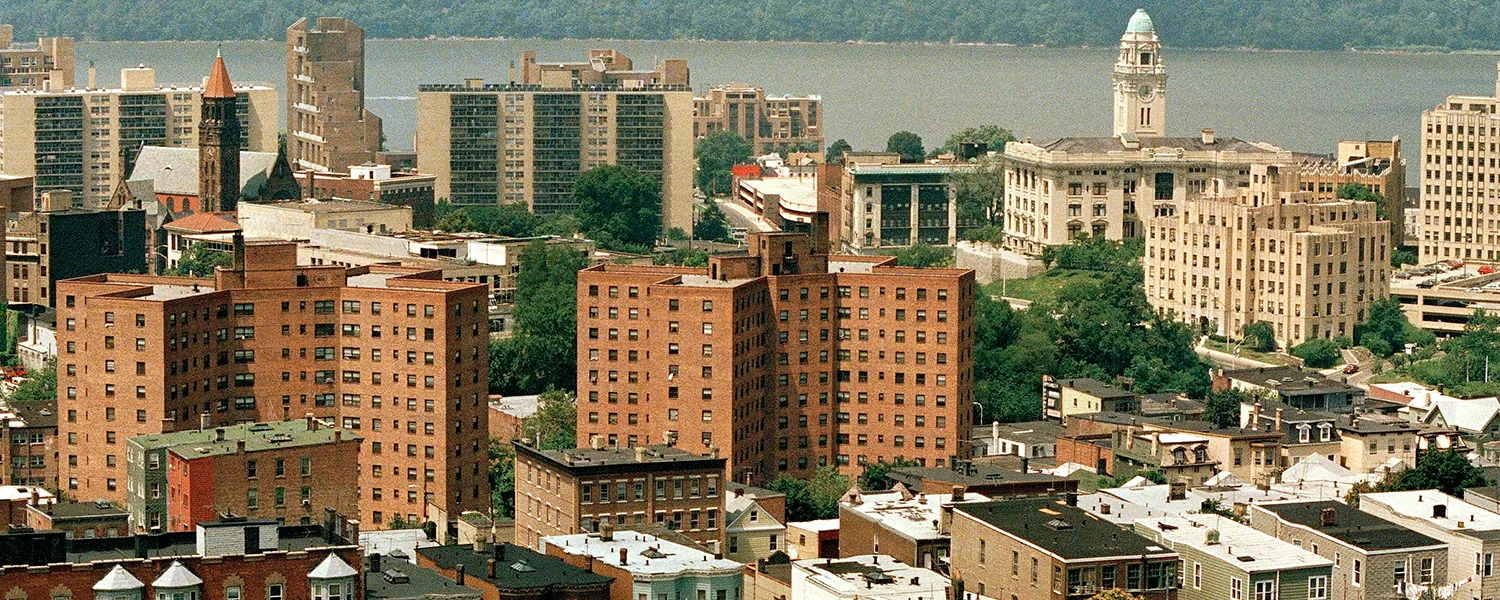
The buildings range from industrial and warehouse space in the Nepperhan and Saw Mill valley to offices, shopping centers, medical buildings, apartments and public facilities along Yonkers corridors. The city's 2000 plan, a dated baseline rather than a current inventory, places much of the city's industrial space in that valley and notes commercial and multifamily parcels beside homes along Tuckahoe Road. Newer planning work is under way for Central Park Avenue and South Broadway. Our work in those settings is shaped by how warehouse roofs, office roofs and apartment roofs are used.
Our clients include property management companies, owners and investors, healthcare operators, manufacturers, schools, public agencies and general contractors. Each reads a roof record differently, so we write the report for the person who must act on it while keeping the underlying documentation the same. A facility manager wants the water path and the repair list. A lender wants condition and remaining life. An insurer wants dated evidence. The same photographs and sketch serve all three.
Local conditions we plan for
Westchester County Airport normals, the nearest long-term station, put the mean annual air temperature at 52.0 degrees Fahrenheit, 47.75 inches of precipitation a year and about 105 days at or below freezing. They also show roughly ten days at or above 90 degrees. The airport lies northeast of Yonkers, and the figures set the seasons the roofs here work through. They explain why we look at seams, drains, penetrations and metal transitions every visit: repeated freezing and thawing works at those details, and summer heat moves membranes and sealants. Where drains sit near trees or equipment, leaf and debris loads add to the risk, so outlets and overflows are on every checklist.
The 2025 Uniform Code in New York, with its companion energy code, took effect in full on December 31 of that year. The State leaves local zoning and construction questions to local authorities, so we confirm the Yonkers permit path for each scope before work is priced.
Records we keep
The record is the product. It holds labeled photographs, the roof sketch, the condition summary, repair history, temporary protection, scope changes and warranty paperwork. For owners with several buildings, our roof condition reports and multi-site roof programs use one format, which allows roofs to be ranked and capital timing to be planned.
Military and veterans facilities in the region, including the Quincy Place Armory in Yonkers and the VA Bronx Healthcare System, follow access and badging rules that we describe to owners in general terms.
Commercial Roofing Questions
What area do you serve?
Yonkers and surrounding southern Westchester communities, including the Yonkers corridors and nearby cities. Distance appears as its own line in a proposal.
Do you work on occupied buildings?
Yes. Access windows, tenant impact and loading routes are agreed before crews stage equipment, and each is written into the work order.
What happens after a call about an active leak?
We send a crew to stop water entry and protect the interior, record the roof with dated photographs and recommend the permanent repair as a separate scope.
Can you review a roof someone else installed?
Yes. We identify the system, record its condition and provide options whoever installed it.
How are prices set?
By the repair boundary, the condition of the insulation and deck, the access the building allows and the schedule required. The proposal states each driver.