
Service Areas
Commercial Roofing in Nepperhan-Saw Mill Industrial Valley, Yonkers, NY
Service Areas
Commercial Roofing in Nepperhan-Saw Mill Industrial Valley, Yonkers, NY
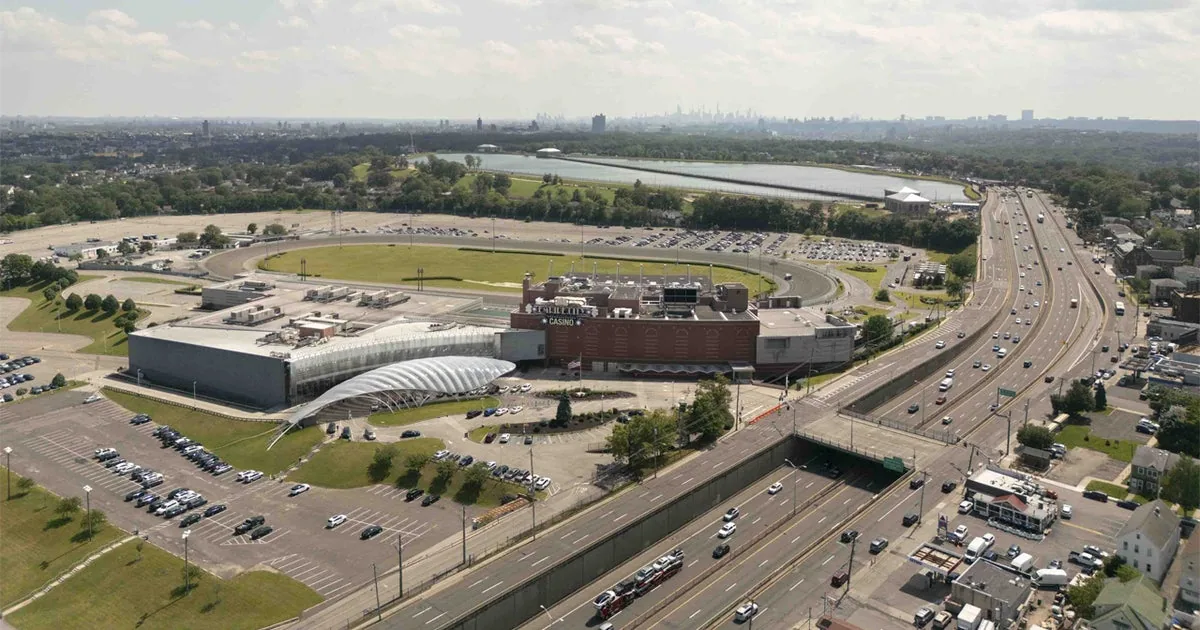
Industrial roofs in the Nepperhan and Saw Mill valley share a problem with the streets around them: both carry heavy traffic, and both show wear where the load concentrates. The valley, bounded by Ashburton Avenue, Nepperhan Avenue and Saw Mill River Road, holds much of Yonkers' industrial space according to the city's comprehensive plan. That plan also points to the former Alexander Smith carpet-mill buildings as part of the valley's industrial fabric. It is a dated baseline, not a current inventory, so we treat every roof as unknown until we are standing on it.
A first visit here produces a condition record. We photograph each roof area, note the drains, curbs, edges and penetrations, and mark what is observed and what is only suspected. The owner then gets a scope with a repair boundary and an access window, in that order.
Start With the Condition Record
A roof walk begins at the access point and works across the building in a fixed order. We photograph from the same positions each time so later visits can be compared. Each photograph is labeled by roof area and tied to a simple sketch.
On an industrial roof, we look first at the places where workers and equipment touch the surface. Hatches, rooftop units, exhaust fans and pipe supports see the most foot traffic and the most vibration. Membrane under a frequently used walk path wears faster than membrane in an open field, and a thin spot there can pass for ordinary aging until a puncture appears.
We record what is dry, what is damp and what is unknown. The unknowns become the testing plan, and the testing plan goes to the owner before any access or cost is committed. A probe, a moisture reading or an infrared scan can narrow a suspected wet area without opening the roof.
Truck Access Shapes the Schedule
The city's plan notes that industrial areas in the valley generate truck movements between the Thruway and commercial uses, and it treats truck routing as a citywide planning issue. For roof work, that means delivery trucks, dumpsters and cranes compete with the same streets and loading areas that tenants rely.
We ask three questions before scheduling. Where will material be staged? Which dock doors and truck lanes must stay clear during working hours? Who can authorize a short closure of a lane or a yard? The answers set the access window and the order of roof sections. A tear-off that opens too large an area can trap the building in weather, while one that moves too slowly keeps a lane blocked for days.
Loading docks add a second layer. Water that sheds toward a dock edge can drip on a door seal or pool near a ramp, so we note where roof drainage meets the ground-level operation and report it alongside the roof findings.
For an occupied building, the work plan names the affected tenant areas and the pedestrian routes that stay open. That plan goes to the property manager before the crew arrives.
What the Roof Assembly Tells Us
Industrial buildings in a valley with a long history can carry several generations of roofing. A recover over an older membrane may hide wet insulation, and a patchwork of repairs can point to a recurring entry point instead of unrelated accidents. We cut or probe where the evidence justifies it and identify each layer before proposing a scope.
If the system is a thermoplastic sheet, seams and flashing laps are the first check. If it is asphalt-based, we look at blisters, splits and ridging. If it is metal, we check fasteners, laps and sealant. The repair has to match what is there, because a patch that is chemically or mechanically wrong for the membrane lifts at the edges within a season. A commercial roof repair that ignores the membrane type often fails within a season.
When the evidence shows widespread moisture or brittle material, the discussion moves from patching to replacement, with the cost drivers listed separately.
Freeze, Thaw and Summer Heat
For weather, the long-term record comes from the Westchester County Airport station northeast of Yonkers. Over 1991 to 2020 it logged roughly 47.75 inches of precipitation a year and close to 105 days with a freezing low. Those freeze-thaw cycles work on seams, drains, penetrations and metal transitions.
The same normals count roughly ten days a year with a high of 90 or more, so summer heat also cycles the membrane. None of this proves a defect at a particular building. It tells us where to look. We check drains for ice damage, seams for movement and flashing for gaps, and we plan any snow and ice damage repair for dry, safe conditions.
Scope Options and Cost Drivers
We present three levels. A targeted repair addresses a proven defect and the details around it. A restoration, such as a silicone coating system over a sound, dry membrane, renews the surface. Replacement removes a roof that is wet, brittle or repaired beyond usefulness.
Each level has its own cost drivers: the area involved, the number of penetrations, the condition of the deck and insulation, the disposal route and the access limits described above. We list them separately so the owner can see which are fixed and which depend on what is found when the roof is opened. Wet insulation and damaged deck sections are the usual unknowns, so the proposal carries a unit rate for each and a method for measuring the quantity in place.
Permits are a local matter. The state's 2025 Uniform Code became fully effective on December 31, 2025, and the Department of State leaves local construction rules to local authorities; we confirm the Yonkers permit route for the scope before naming a start date.
Records to Keep
At closeout the owner receives labeled photographs, a list of the work performed, product data and any open items. That file is useful the next time a manager changes, a lender asks about the roof, or a tenant reports water.
Owners with space in the downtown Getty Square area or along the Yonkers Avenue corridor can keep the same record format across buildings, so condition and cost can be compared roof to roof. A yearly maintenance visit adds a dated entry each time.
Commercial Roofing Questions
How do you work around truck traffic on an industrial roof job?
We agree on staging areas, dock lanes and delivery windows before the crew mobilizes. Material arrives in planned loads, and lifts and dumpsters sit where they do not block tenant trucks.
Can an older recovered roof be recovered again?
Sometimes, if the existing layers are dry and the deck can carry the added weight. We probe and scan first, and we confirm with the city what the permit path allows for that scope.
What does freeze-thaw do to a flat roof?
Water that enters a seam or drain freezes, expands and opens the gap further. Repeated cycles enlarge small openings, so we look hard at seams, flashings and drain bowls after winter.
Will you identify the membrane type before quoting?
Yes. We confirm it by markings, samples or records, because repair materials must match the existing system. If it cannot be confirmed, the proposal says what must be exposed first.
Do you handle a leak outside business hours?
Emergency calls are answered at any hour, holidays included. The first visit protects the interior and records the roof. Permanent repair follows once the surface is dry enough to bond.