
Service Areas
Commercial Roofing in Tarrytown, NY
Service Areas
Commercial Roofing in Tarrytown, NY
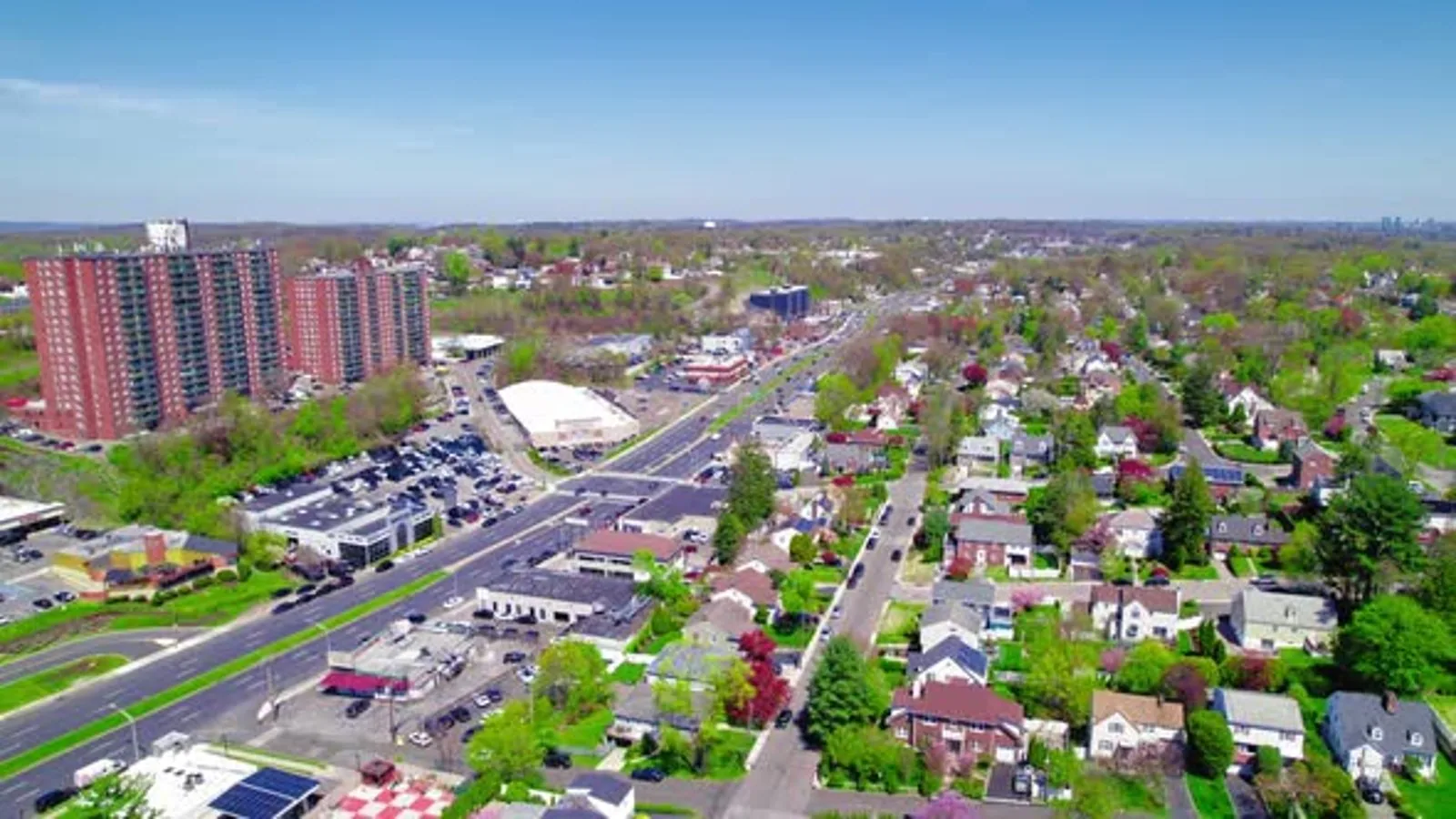
Water moving through a ceiling in Tarrytown, NY sets two jobs: the first job is to stop the damage, the second is to keep a plain record of what was done. Those are separate entries. Temporary protection, such as a tarp, a sealed patch or a diverted drain, buys time. The permanent correction is a different scope with a different price and a different schedule. We log both, with photos and times, so the owner can see exactly what was done on the day and what remains to be decided. Tarrytown is about 8.2 miles from Yonkers in a straight line, and the exits that serve it make an urgent dispatch practical.
The first hour
The first call gives us a handful of facts: where the water is, whether it is active, what the weather is doing and who is on site. We ask for photos of the ceiling and any water on the floor, and we ask the occupant to protect equipment and records where they can do so safely. If the leak is active and the roof can be reached safely, a crew goes up to locate the entry and place temporary protection.
Safe access comes before speed. Wet membrane is slippery, wind can pull a tarp out of a worker's hands and lightning ends the visit. If conditions are unsafe, we protect the interior, document what is visible from the ceiling side and hold the roof visit until it is workable. That decision goes into the log with the time and the reason.
Interior protection is the part owners can start before we arrive. Move stock and records out of the drip zone, place containers under active flow, switch off power to wet fixtures if it can be done safely and photograph everything before it moves. We ask for those photos on the first call, since they show the condition at the earliest hour and often reveal the path the water took.
Routes into Tarrytown
Tarrytown and Sleepy Hollow appear together on the Thruway's I-87 access list, and an I-287 exit links Tarrytown to the Saw Mill River Parkway and Route 119. NYSDOT's Route 9 corridor project also lists Tarrytown among the Hudson-side localities along that route.
Those routes give a crew from Yonkers more than one way in, which matters when a lane is closed or traffic is heavy. They do not decide where a truck can stop at the building. At the first call we ask for the street, the nearest cross street and any gate or loading restrictions, and we confirm the staging spot once on site. The arrival time and the route taken are written into the log.
Temporary protection and its limits
A temporary repair is meant to hold for days or weeks, not seasons. It may be a patch of reinforced membrane over a split, a sealant bead over an open lap or a tarp weighted at the edges. Each has limits: tarps blow off, sealants shrink and patches lift in cold. We tell the owner how long each is expected to last in the conditions at hand and when we will recheck it.
We also record the things temporary work cannot fix. A wet layer of insulation stays wet under a patch. A corroded fastener keeps corroding. A emergency roof repair entry in the log states the work done, the area covered, and the follow-up needed, with the date by which the owner should decide.
Weather decides how long the interim lasts. A patch applied before a hard freeze may be tested within days, and a tarp that survives wind on one day can fail on the next. We schedule a recheck after the first storm or freeze following any temporary work and write the result into the log.
From symptom to cause
After the emergency, the investigation begins. A stain can travel from an edge, drain, curb or seam, so its location does not prove the entry point. We trace the roof side with a photo sequence, probe seams and flashing and, where needed, scan for moisture. The report lists the suspected cause, the evidence for it and the test that would confirm it.
Cause matters for cost. A cracked boot costs little; a failed membrane section costs more; saturated insulation costs the most. Naming the cause early prevents a series of small repairs on the wrong spot. A leak repair scope should state its repair boundary and what lies outside it.
Where the entry point is still unclear, a hose test narrows it. Water is applied to one small area at a time, starting low on the roof and working upward, while an observer inside watches for the first drip. The test is slow and it needs two people, but it replaces a guess with a recorded result, and each step of it goes into the report with the time and the location.
Winter leaks and ice
Westchester County Airport logs freezing-or-colder lows on roughly 104.7 days a year and 47.75 inches of precipitation. Ice dams, frozen drains and cracked sealants cause many winter leaks. Water backs up behind ice, finds a lap or a seam and enters.
We record ice conditions, melt patterns and drain status, and we avoid chipping ice near the membrane. Clearing happens with methods that do not cut the sheet, and some ice is better left until it melts. The log notes each decision, because a membrane cut during ice removal is a new defect that the owner should not inherit unknowingly. A snow and ice damage review follows once the weather clears.
Permanent correction and code path
Once the cause is known, the permanent scope is written: area, materials, tie-in, access and schedule. Local authorities handle permits and zoning under New York's 2025 Uniform Code, which took full effect on December 31, 2025, so we confirm the permit path for the actual scope.
Cost and timing are stated side by side. A repair can often be done in the next access window. A larger replacement needs lead time for materials and a permit. The owner chooses, and the open items stay in the file until they are closed.
Drivers of cost are listed in plain terms: area, wet insulation, access, hoisting, weather holds and tenant protection. Where the cause is a single detail, the scope may be a few hours of work. Where the assembly is saturated, the scope is larger, and the report shows the moisture findings that support it. The owner sees the numbers before choosing.
Next decision
The closeout file for an emergency includes the first call time, the arrival time, every photo, the temporary work, the cause findings and the permanent options. The same file serves owners in Sleepy Hollow, Irvington and the Yonkers Getty Square and downtown area, and it feeds a preventive maintenance plan that lowers the odds of a second emergency.
Commercial Roofing Questions
What happens when a leak is reported in Tarrytown?
We take the location and photos, protect what we can from the interior, and send a crew to the roof when conditions are safe.
How long does temporary protection last?
Days to weeks. We state the expected life in the conditions at hand and set a recheck date.
Why keep temporary and permanent work separate?
They carry different costs and different limits. The log keeps each entry distinct so decisions stay clear.
Do you remove ice from a roof?
Only with methods that protect the membrane, and sometimes ice is left to melt. Each decision is recorded.
How far is Tarrytown from Yonkers?
About 8.2 miles by straight line; the drive varies with route and traffic.