Service Areas
Commercial Roofing in Hartsdale, NY
Service Areas
Commercial Roofing in Hartsdale, NY
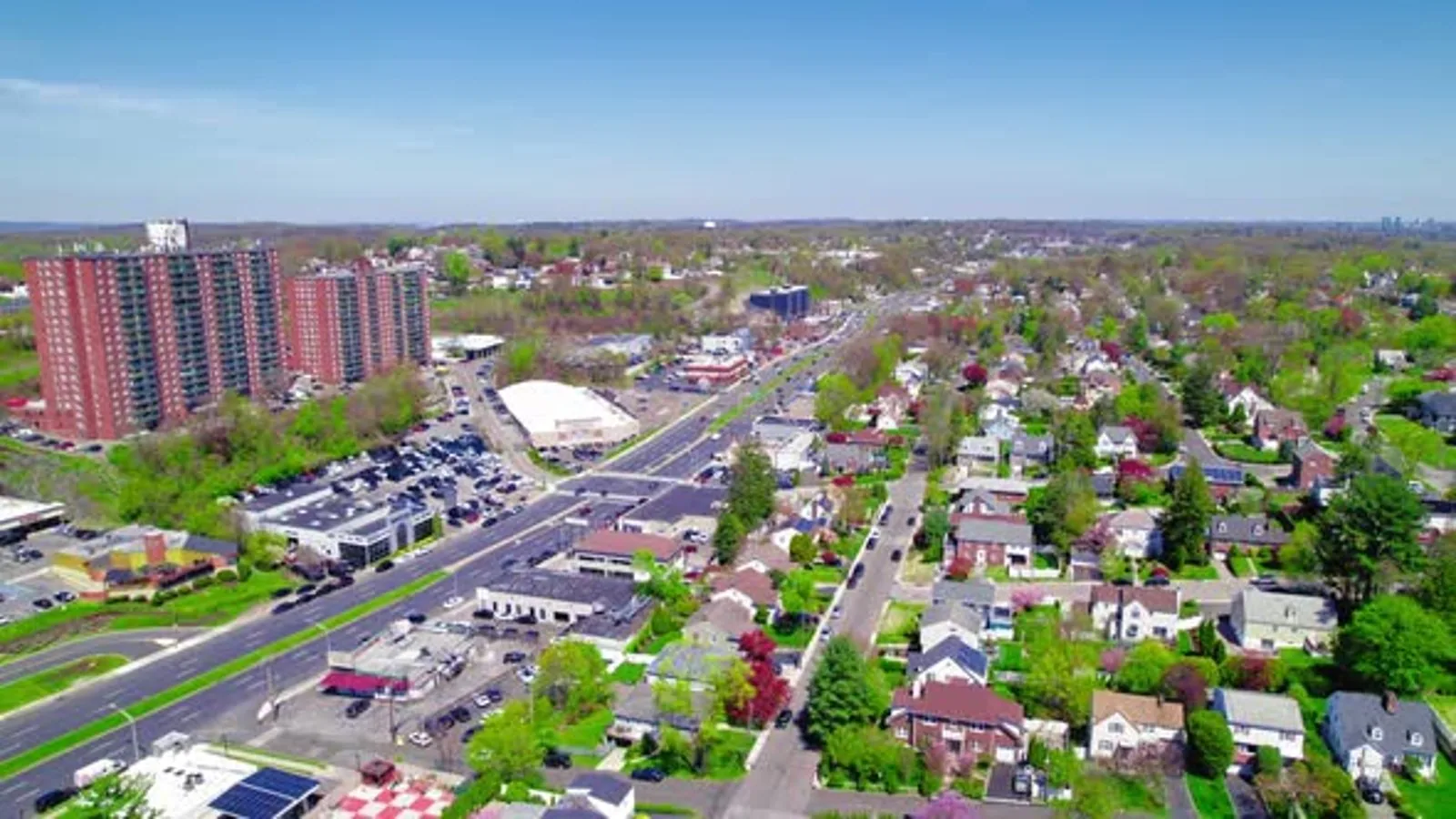
Water that stays on a commercial roof after the rain has stopped is the first item we record in Hartsdale, NY. Standing water is a condition, not a diagnosis. It may come from a clogged strainer, a low area in the deck, an old patch that raised a seam, or a drain set too high. We photograph the water line, mark its limits and note how long it remained, then trace the cause before proposing a repair. Hartsdale is about 5.8 miles from Yonkers in a straight line, close enough that a post-rain visit can be scheduled while the evidence is still on the roof.
What standing water tells us
Westchester County Airport, the nearest long-term station, records 47.75 inches of precipitation in a normal year. A roof in that climate sheds a large volume of water every season, and the drainage path has to move it reliably. When a roof does not drain, the water adds weight, softens sealants and sits against seams for days.
We measure what we can: depth at the deepest point, the area covered and the distance to the nearest drain or scupper. We also check whether the water stood before or after a recent repair. A pond that appears beside a patch points to a different cause than a pond over an open field, and the record keeps those cases apart.
Timing helps. We prefer to see a roof within a day or two of rain, when water is still present and the surface is damp enough to show wet and dry boundaries. When that is not possible, we ask the owner for dated photos from the last storm, and we pair them with a hose test at the suspected low area, run under controlled conditions and recorded step by step.
Drains, scuppers and overflow
At each outlet we check the strainer, the bowl, the clamping ring and the membrane connection. On a scupper we look at the opening, the sleeve through the wall and the discharge path outside. A blocked downspout can send water back toward the roof, so the route beyond the building matters as much as the outlet.
Overflow is the part many roofs lack or lose. If a primary drain clogs, water has to leave through a secondary path before it rises past the flashing. We note whether an overflow exists, where it discharges and whether it is clear. The finding feeds a short drain and scupper work order, usually the least expensive item on the whole report.
Debris is the usual culprit. Leaves, granules, scraps of old roofing material and wind-blown trash gather at strainers and scupper throats. We clear what we find only after photographing it, since the debris pattern shows which way water and wind run across the roof. A drain with a clean strainer but a sediment layer in the bowl points to a different maintenance gap than one packed with leaves.
Low spots and what they cost to fix
Low areas have three common sources: original slope, deck deflection and layered repairs that changed the surface. The remedy changes with the source. Tapered insulation or a cricket can redirect water on a sound deck. A new drain can serve a basin that cannot be re-sloped. A damaged deck needs a structural opinion before any membrane work.
Cost follows the remedy. Tapered insulation adds material and labor across the corrected area, a new drain adds a penetration and plumbing connection, and deck repair adds trades. Our scope names the removal area, the new layers and the tie-in to the existing roof, and it marks which items are firm and which depend on what is found under the old membrane. A ponding water repair is only as good as that boundary.
Winter exposure on a wet roof
That station also counts about 104.7 days a year when the low reaches 32°F or less. Water left standing at a seam or drain freezes, expands and breaks the bond over time. That is why drainage is a winter item as well as a summer one: a pond in December becomes an ice sheet in January and a split seam in March.
We schedule the drain review ahead of the first hard freeze when we can, and we recheck after thaw cycles. If ice already blocks an outlet, we record it, avoid chipping near the membrane and plan a clearing method that does not cut the sheet. The record shows the condition on each date, which supports a later claim or warranty discussion.
Access, routes and work windows
On the Thruway's I-287 listing, Hartsdale and Knollwood Road sits alongside the Elmsford, White Plains and Tarrytown exits, which gives a crew several highway routes into the central county. The final approach still depends on the building: a tight lot, a shared drive or a loading area decides where a lift can stand.
Before drain work, we confirm who holds the roof key, which areas below the work zone are occupied and whether a ceiling panel can be lifted for a look from the inside. A short repair can fit a morning access window. A larger correction, such as tapered insulation across a basin, needs a longer window and a forecast with two dry days.
Records to retain
A drainage review leaves a short file: photos of each outlet before and after cleaning, the water-line photos, the sketch of low areas and the measured depths. It also lists the open items and the date each was found. An owner can hand that file to a successor, an insurer or a lender without a long explanation.
We recommend keeping the file with the roof drawings and warranty papers. If ponding returns after a correction, the earlier record shows what changed, which narrows the search. A roof condition report can fold the drainage findings into a wider look at age, remaining life and likely spending over the next few years, so the owner sees the drainage items in the context of the whole roof.
Next decision
The report ends with a ranked list. Drain cleaning and strainer replacement come first, then overflow corrections, then low-area remedies. The owner chooses how far down the list to go this season, and the open items stay on file for the next. Nearby properties in Elmsford, Scarsdale and the Yonkers Tuckahoe Road corridor are reviewed the same way.
Where moisture has already entered the assembly, an infrared moisture survey maps the wet insulation before a scope is priced, and the wet area, not a guess, sets the tear-off limit.
The open items also carry a recheck date, usually after the next heavy rain, so a correction is tested against real weather before the file is called closed.
Commercial Roofing Questions
How long should water stay on a flat roof after rain?
Most roofs shed it within a day or two. Water that remains longer is recorded, measured and traced to a cause.
Can a clear drain still leave a pond?
Yes. The low area may sit away from the outlet, or the drain may be set above the lowest point. We check slope as well as the strainer.
Does ponding mean the membrane has failed?
Not by itself. We look for open seams, softened sealant and wet insulation before reaching that conclusion.
What is the usual first repair?
Cleaning strainers and restoring overflow paths. These cost little and remove the most common cause of standing water.
How far is Hartsdale from Yonkers?
Roughly 5.8 miles as the crow flies; we confirm the drive and the access window ahead of each visit.