Service Areas
Commercial Roofing in Riverdale Avenue Commercial Area, Yonkers, NY
Service Areas
Commercial Roofing in Riverdale Avenue Commercial Area, Yonkers, NY
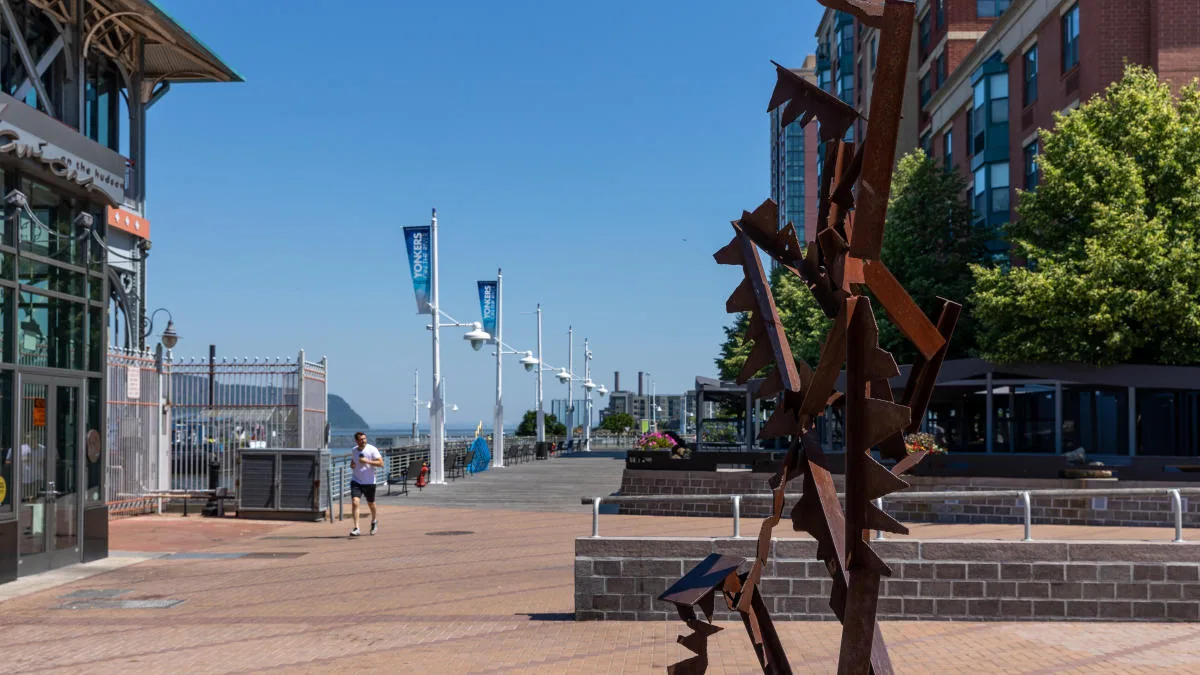
Riverdale Avenue sits in the southwest quadrant of Yonkers, and the city describes it as an established commercial area served by the ordinary street network rather than by one highway or one address. That description tells a roofer what to prepare for. Work on a commercial roof here is judged against the homes, tenants and driveways around it as much as against the membrane itself. Every visit to a low-slope or metal roof for a building owner or property manager in this area ends with a condition record: photographs in sequence, the roof assembly as found, the open items, and the next decision the owner has to make.
Know the Edges of the Area
The precinct description of this part of the city places the area between the Hudson River on the west and the Saw Mill River Parkway on the east, with Nepperhan Avenue and Prospect Street forming the northern edge. For a roofing job those edges are useful because they define where a crew will arrive from and which streets a delivery truck will actually use. A lift, a boom truck and a tear-off dumpster all need curb space, and a street network without a single wide arterial means we check the approach before we price the day. We record the street width, the loading spot, the distance from the staging point to the roof access, and any shared driveway the neighbors also use.
The boundaries tell us nothing about the roof itself. The first walk establishes the membrane type, the layer count and the condition, and the written record carries them forward.
Commercial Next to Residential
Yonkers planning language from the year 2000 treats neighborhood commercial areas as interwoven with residential districts, and it names corridor access, buffers and tenant continuity as the practical considerations. Those three words describe a roof job well. Access is the route a crew takes to the roof. A buffer is the space between roofing activity and the house next door, which matters for hot work, adhesive odor, debris and early-morning noise. Tenant continuity is the plan that keeps a shop open, a clinic seeing patients or an office answering phones while the roof above it is open.
On a mixed street we write three short rules into the work order before the first day: the hours when loud work is allowed, the path debris takes from roof to container, and the room where a leak would reach first.
What We Check on a First Walk
A first walk on a neighborhood commercial roof starts at the edges and drains, because that is where small defects become interior damage. We look at the perimeter metal for open joints and loose fasteners, at the flashing where the roof meets a parapet or wall, and at each penetration for failed sealant or a cracked boot. We probe seams in the field of the membrane, check whether the surface is blistered, split or ridged, and look for places where water collects after rain. Drain strainers, scuppers and gutters are traced to the point where water leaves the building, since a clear grate does not prove the pipe below it is moving water.
Each rooftop unit curb and vent is a place where the membrane has been cut, so each gets its own look. We photograph every area before touching it, so the record shows the condition we found. A stain inside is a lead, since water often travels along a deck or under insulation before it appears on a ceiling.
Repair, Recover or Replace
The owner's options usually fall into three groups. A local repair closes a defined defect, such as a split seam, a failed flashing termination or a puncture, and it is the right call when the surrounding membrane is sound and dry. A coating or recover adds a new layer over an existing roof that still has a stable deck and dry insulation. A full replacement removes the old assembly and installs a new one, and it becomes the sensible choice when moisture has spread through the insulation or when repairs have started to overlap each other.
Cost and timing follow the same few drivers on every building: how much of the roof is wet, how many layers are already in place, how many penetrations and edges the roofer has to detail, what the deck underneath needs, and how much of the work has to be phased around occupied space. A roof recover can shorten the schedule when the layers below are dry, but it does not remove wet insulation, and we confirm moisture before recommending one. We price each option separately so the owner sees the repair boundary and the replacement scope side by side.
Winter and Summer Timing
The closest long-term weather record is kept at Westchester County Airport, north-east of Yonkers, and averages 47.75 inches of precipitation a year, with a daily low at or below freezing on 104.7 days. Water that enters a small opening, freezes and thaws repeatedly will widen it, so seams, drains and metal transitions get extra attention before winter. The same record counts 9.7 days a year at or above 90 degrees, so a dark membrane or an exposed coating goes through heat cycling as well.
Those numbers shape the work window. Adhesives, sealants and many coatings need dry surfaces and moderate temperatures, so a repair in January is often a temporary closure that we schedule for permanent correction in spring. When a roof is already leaking into a unit, we protect the interior first, make the opening watertight, and write the temporary work and the permanent scope as two separate entries in the record. Emergency calls are answered around the clock, because a split does not wait for a convenient week.
Records the Owner Keeps
At closeout the owner receives the photo sequence, the list of materials and details used, and the open items we found but did not touch. A building that changes hands, changes tenants or changes insurers will need that file. Permits are a local question: the state's 2025 codes have been fully in force since December 31, 2025, yet zoning and construction rules still run through the city, so we confirm the permit path for the specific scope before work starts.
A property repaired now and scheduled for replacement later should have that plan on paper, with the reason, the priority and the review date. Elsewhere in the city, the downtown waterfront and the South Broadway corridor are served from the same dispatch, and a commercial roof inspection is the usual first step for any of them.
Commercial Roofing Questions
Can a crew work beside homes without disturbing the neighbors?
Mostly, yes, with a written plan. We set loud-work hours, put debris containers where the haul path avoids windows and driveways, and give neighbors and tenants a contact for complaints. Hot work and strong adhesives get extra planning near open windows.
What does a first inspection produce?
A photo sequence by roof area, a list of defects ranked by urgency, and a written statement of what is known and what remains uncertain. Moisture questions are marked for a thermal or core check instead of being guessed.
Does the cost change if the roof is over a shop that has to stay open?
It can. Phasing, protection inside, after-hours work and slower staging add labor. We price those items as separate lines so the owner can see which are tied to occupancy and which are tied to the roof.
Which roof types do you work on in this area?
Single-ply membranes such as TPO, asphalt-based built-up and modified bitumen roofs, standing seam and retrofit metal, spray foam and liquid-applied coatings all come through neighborhood commercial streets. The system on a given roof is confirmed on site before any repair is chosen.
What if a leak starts after hours?
Call at any hour, any day. The first step is protecting the interior and stopping water at the roof. We document the temporary work and schedule the permanent correction once the surface is dry enough to accept it.