
Service Areas
Commercial Roofing in Rye, NY
Service Areas
Commercial Roofing in Rye, NY
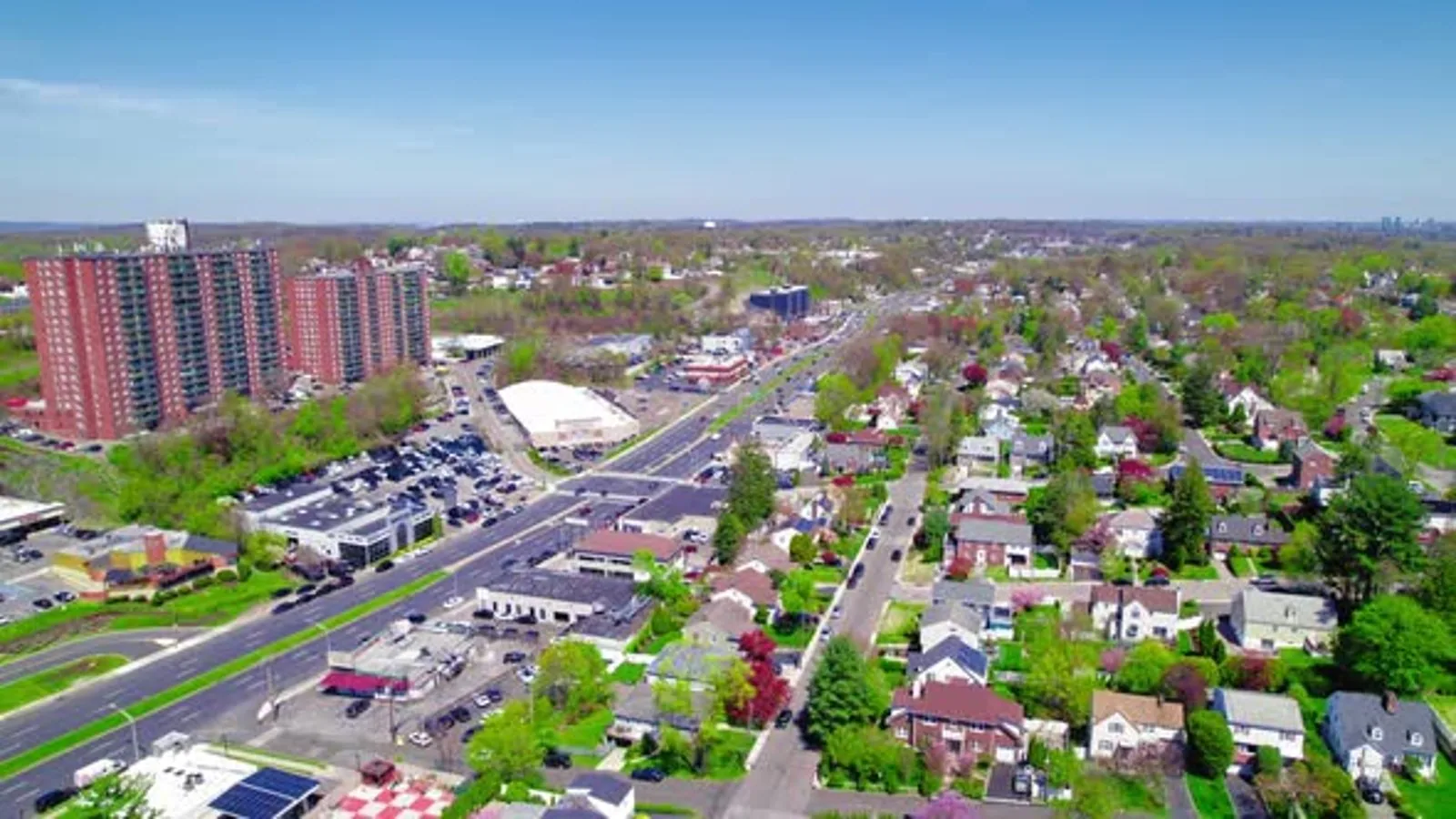
Snow load, ice at the drains and water refreezing at the seams decide how a commercial roof in Rye, NY ages. Regional normals from Westchester County Airport put the count at about 104.7 days a year with a low at or under 32°F. A roof that meets that many freezing days has to shed water, move it away from the building and survive repeated expansion at every joint. We inspect it as a winter structure first: drains and outlets, seams and laps, edge metal and penetrations, each photographed and dated. Rye is about 9.5 miles from Yonkers in a straight line.
What freezing days do to a roof
Water gets into small gaps and freezes. Ice takes more room than water, so the gap widens, and the next thaw lets more water in. The process works at laps, sealant joints, flashing edges, cracks in coatings and around fasteners. It does not need a large defect to start.
The same station shows a 52.0°F annual mean and 47.75 inches of precipitation. Neither number says anything about a particular roof. They do say where to look: at the places where water collects and where materials move. We record each of those places by zone, with a photo and a condition note, so the next winter can be compared with this one.
Metal behaves differently from membrane. Copings, gutters and flashings shrink in the cold and grow in the heat, and their joints are built to allow it. When those joints are blocked by sealant or rust, the metal buckles or splits instead. We check that expansion joints can still move, that fasteners are not over-tightened and that laps have not been caulked solid.
Drains and outlets in cold weather
A drain is the weak point of a winter roof. Meltwater runs to it, refreezes in the bowl or the pipe and backs up behind the ice. Strainers pack with leaf litter, and cold pipes crack. When a drain blocks, the pond that forms adds load and finds the nearest seam.
We check each outlet for debris, ice, cracks in the bowl and a tight membrane connection. We confirm that overflow routes are clear and that water leaving a scupper does not run back along the wall. A drain and scupper clean-out before the first hard freeze costs little, and the dated photos show the condition on the day.
Gutters and downspouts deserve the same winter attention. A gutter full of ice pulls away from the fascia, and a downspout that freezes solid sends water out of the first joint it finds. We walk the discharge path too: whether water lands on a walkway that will glaze over, or runs back toward a foundation. Those findings are building items, but they come out of the roof walk, and the record lists them separately from roof scope.
Ice, snow and the limits of removal
Removing snow and ice from a membrane roof has risks. A shovel or an ice pick cuts a sheet, a pile of snow in the wrong place can overload a section and a hurried clear-out can drop ice onto an entrance. We prefer to let the owner decide with the facts: where the load sits, whether the building has reported leaks and whether a crew can work safely.
If clearing is justified, we mark the area, use methods that protect the surface and photograph the roof before and after. If it is not, the entry says so and sets a date to check again. A snow and ice damage review after a hard winter records splits, lifted laps and stained ceilings, each tied to a zone.
Ice dams form where heat from inside melts the underside of snow and the water refreezes at the cold edge. On a low-slope commercial roof the same effect shows at parapets, drains and the lines between heated and unheated areas. We look for staining on ceilings along those lines and for insulation gaps that let heat escape. Fixing the heat path, not just the leak, is what keeps ice from forming again.
Routes and access
Port Chester and Rye destinations share the I-287 exit list with Tarrytown, Elmsford, Hartsdale and White Plains. Those exits give a crew from Yonkers a direct route east, but they do not decide where a truck can park at the building.
We ask about the lot, the street, the entrances and the roof access, and we draw a staging sketch with drop zones and barricade lines. In winter the sketch also notes where plowed snow is stacked, which can block a lift. An access window is set with the owner and any tenants, with an alternate day for weather. The log records which one was used.
Cold weather adds a few access items. Ladders and roof hatches ice over, rooftop walkways need clearing before anyone steps on them and fall protection tie-off points need a check for rust and fit. We include them in the access plan, because a safe way up is part of the scope, and a delay to clear it is a cost the owner should see in advance.
Scope options and cost drivers
A winter inspection tends to produce one of three results: a short repair list, a recover or replacement recommendation, or a monitoring plan. Repairs are priced by area and access. A recover depends on the insulation test and the deck. A replacement depends on the amount of wet material and the details to be rebuilt.
Cost follows area, removal depth, penetrations, hoisting, tenant protection, disposal and the weather windows available. Winter limits some work: coatings and adhesives need temperatures above their minimums, so a scope may be split into winter repairs and spring installation, with the open items listed for each.
Permits and energy code
For energy and construction rules, the state's 2025 codes became fully effective December 31, 2025, with 2024 ICC editions as their base. Local authorities handle construction regulation, so a Rye project needs the city's permit path confirmed for its scope.
Insulation values often come up on a replacement, and the written scope names the question for the reviewer. We do not guess at the outcome. We list the code items as open until the city confirms them, so the owner can budget for the possible range.
Next decision
The winter report ends with a ranked list: items to correct before the next freeze, items to watch and items to plan for spring. The owner picks the line to draw. The same format serves nearby Rye Brook, Port Chester and Larchmont, and a preventive maintenance visit each autumn keeps the record current.
For properties with a long leak history, the first winter record becomes the baseline. Comparing it with next year's photos shows whether the repairs held, which seams moved and which drains kept up. A roof condition report turns that comparison into a plan with costs and dates.
Commercial Roofing Questions
Why do roofs leak in winter when it is not raining?
Meltwater, ice dams and refreezing push water into gaps that stay dry in other seasons. Drains and seams are the usual entry points.
Should snow be removed from a flat roof?
Only when the load and risk justify it, with methods that protect the membrane. We document the decision either way.
Which items should be done before the first freeze?
Drain clean-out, sealing open laps and fixing loose edge metal. They are small and prevent the largest winter problems.
Can coatings be applied in winter?
Usually not. Most need temperatures above a minimum, so installation moves to spring and winter repairs are temporary.
How far is Rye from Yonkers?
Roughly 9.5 miles by straight line; the drive and access are confirmed before each visit.